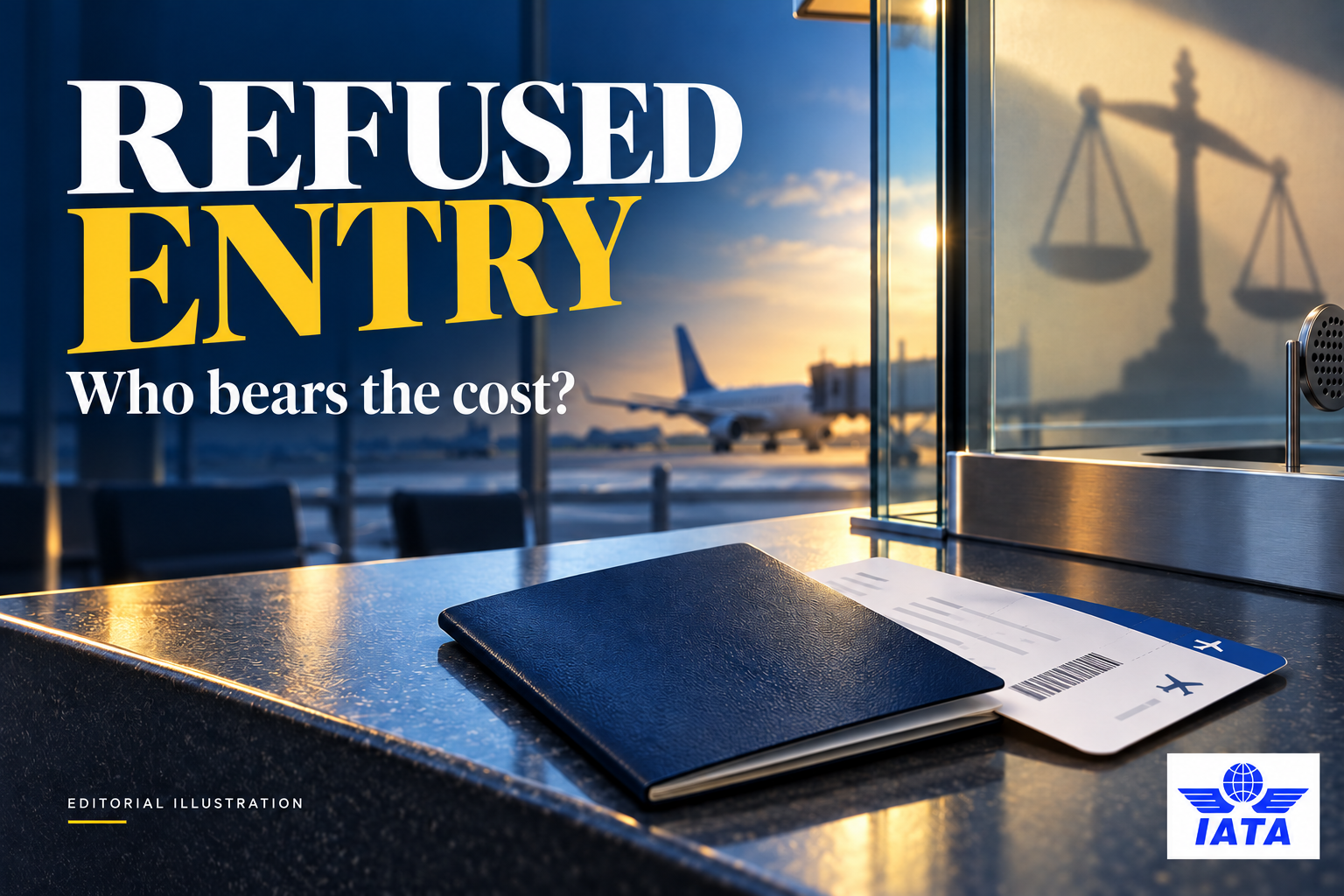
IATA has urged governments to give airlines clearer reasons when passengers are refused entry on arrival and to allocate the resulting costs according to what each party could reasonably control.
The call, issued in Macao on 30 October 2026, concerns how airlines and border authorities prevent and manage inadmissible-passenger cases. It is an industry policy recommendation, rather than an announcement of new visa or entry requirements.
For Nigerian and other African travellers, the issue reaches beyond an interrupted journey. A refusal can trigger rebooking, removal arrangements and delays affecting aircraft, crews and connecting passengers. Airlines check documents before departure, but IATA says some decisions rely on government information or assessments that carriers cannot access.
Refusals without an explanation
IATA’s report draws on responses from 49 airlines and 22 border authorities. Forty airlines reported cases in which immigration authorities did not disclose why entry had been refused, limiting their ability to identify what could have been prevented.
Most responding airlines attributed roughly 20–30% of cases to documentation and processing errors. Every airline surveyed reported operational delays associated with inadmissible passengers.
The report’s methodology provides an important qualification: findings primarily concern cases recorded in 2024, and the self-reported survey was not designed to produce statistically representative global figures. Its results should not be read as the refusal rate for Nigerian travellers, any African passport or an individual destination.
Who pays for care and removal?
IATA says ICAO standards distinguish custody and care costs associated with improper documentation from costs arising in other categories of inadmissibility. It argues that national practice does not consistently reflect that allocation.
Reported regional average costs ranged from about US$4,000 per passenger in North Asia to US$14,000 in Europe. These are survey findings about handling cases, not standard charges that every refused traveller must personally pay.
IATA wants penalties and cost sharing linked to due diligence and the reason for refusal. It also seeks earlier digital document verification, better information exchange, immigration liaison support and clearer coordination when removal is required.
What travellers should take from the report
TEA’s practical takeaway is to check the requirements for the actual destination and transit itinerary, using the traveller’s passport, residence and purpose of travel. Do not treat an airline document check as a promise of admission.
The statement does not establish a new exemption, compensation entitlement or right of entry. Nor does it determine who must pay in a particular passenger’s case. Those questions require the applicable national rules and the facts of the journey.


